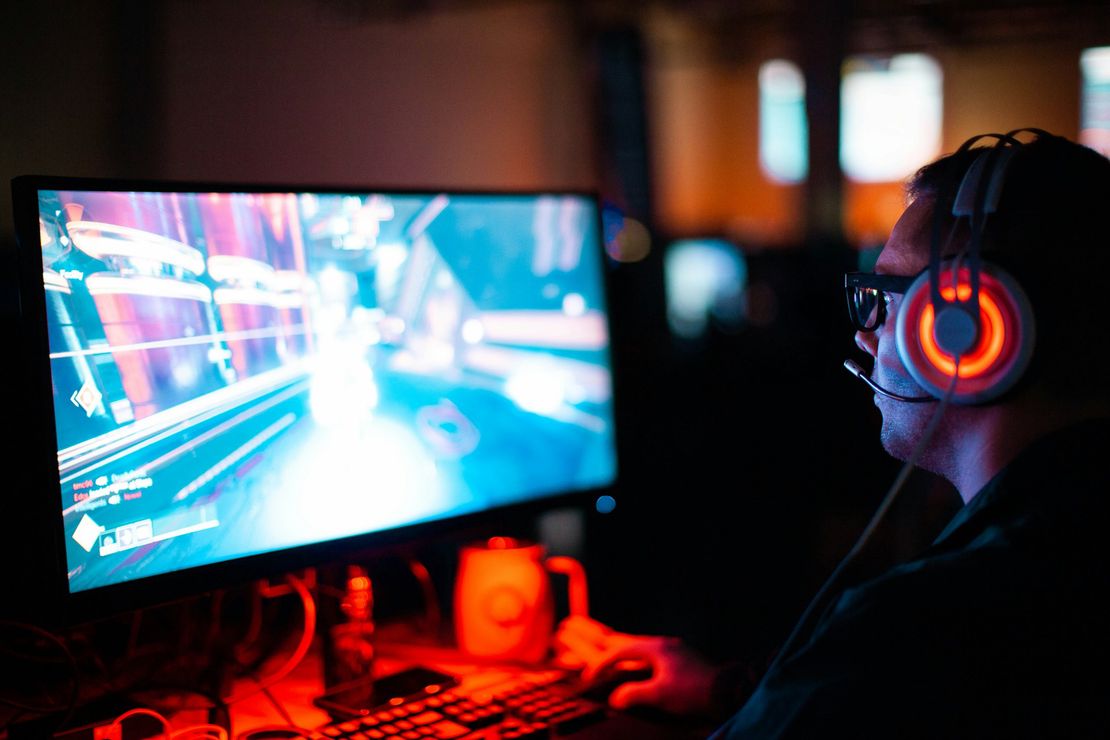
Gaming Addiction: When Gaming Has Taken Over
Make an AppointmentGaming is not the problem. For most people, gaming is a legitimate source of entertainment, social connection, and enjoyment. But for a growing number of men, gaming shifts from something they choose to do into something they feel compelled to do. The hours increase. Sleep suffers. Relationships deteriorate. Work or study falls behind. And attempts to cut back either fail or feel impossible to sustain. If gaming has started to feel less like a choice and more like a need, psychological support can help. At Excel Psychology in Spring Hill, Brisbane, we work with men experiencing gaming addiction and gaming disorder in a confidential, non-judgemental space. No referral is required. Telehealth is available across Australia.
What Is Gaming Addiction
Gaming disorder was formally recognised by the World Health Organization in 2019 and is characterised by a pattern of gaming behaviour in which gaming takes priority over other interests and daily activities to the extent that it causes significant impairment in personal, family, social, educational, or occupational functioning. What distinguishes gaming disorder from heavy recreational gaming is not the number of hours spent playing, but the degree to which gaming has come to dominate thinking and behaviour, the distress that arises when gaming is not available, and the impact it is having on other areas of life. Signs that gaming may have become problematic include thinking about gaming constantly, even when doing other things, feeling irritable, anxious, or distressed when unable to play, using gaming to escape from problems, stress, anxiety, or difficult emotions, lying to others about how much time is spent gaming, losing interest in activities that were previously enjoyable, neglecting sleep, meals, personal hygiene, or relationships to play, continuing to game despite recognising the negative impact it is having, and failed attempts to reduce or control gaming.
Why Gaming Becomes Compulsive
Modern video games are designed by teams of engineers and psychologists whose explicit goal is to maximise engagement and keep players playing for as long as possible. Variable reward schedules, social reinforcement, progression systems, and the fear of missing out are built into the architecture of most online and multiplayer games. For men who are also dealing with anxiety, depression, loneliness, low self-esteem, or a lack of fulfilment in other areas of life, gaming offers something uniquely compelling: a structured environment where effort is rewarded, competence is measurable, social belonging is available, and the sense of achievement is immediate. This is not weakness. It is a rational response to an environment that is specifically engineered to be as compelling as possible. Understanding what needs gaming is meeting is central to understanding how to address it.
What Gaming Addiction Often Masks
In clinical practice, gaming addiction rarely exists in isolation. Most men who present with problematic gaming are also dealing with one or more underlying issues including anxiety, depression, social anxiety and difficulties with real-world relationships, low confidence and self-worth, ADHD and difficulties with attention and impulse control, and a sense of emptiness or lack of direction and purpose in life. Gaming provides a reliable way of managing each of these experiences in the short term. It is only when the gaming itself becomes the problem, when it is consuming time and life rather than enriching it, that the underlying issues become impossible to avoid. Effective treatment for gaming addiction addresses both the gaming behaviour and whatever is underneath it.
Psychological Treatment for Gaming Addiction in Brisbane
At Excel Psychology in Spring Hill, Brisbane, psychological treatment for gaming addiction is practical, collaborative, and focused on the whole picture rather than simply the gaming itself. Treatment draws on cognitive behavioural therapy, acceptance and commitment therapy, and motivational approaches and typically involves understanding what needs gaming is meeting, whether that is connection, escape, achievement, competence, or control, identifying and addressing the underlying emotional and psychological factors that make gaming so compelling, developing alternative ways of meeting those needs that are consistent with the life the client actually wants, working on the practical consequences of problematic gaming including relationships, sleep, work, and physical health, and building the skills and strategies to develop a more balanced and intentional relationship with gaming and technology. The goal is not necessarily to stop gaming entirely, though for some men that is the right outcome. For many, the goal is to develop a relationship with gaming that is genuinely chosen rather than compulsive.
Gaming Addiction and Relationships
Problematic gaming takes a significant toll on relationships. Partners often describe feeling ignored, deprioritised, and unable to compete with the screen. The emotional disconnection that gaming addiction creates, the physical presence alongside the psychological absence, is one of the most common drivers of relationship breakdown in men of gaming age. Children are also affected when a parent’s gaming takes priority over family engagement. Addressing gaming addiction is frequently about much more than the gaming itself.
Gaming Addiction in Adults
Gaming disorder is often discussed as though it primarily affects teenagers, but a significant proportion of men experiencing problematic gaming are adults in their twenties, thirties, and forties. For adult men, gaming addiction often develops or intensifies during periods of transition, unemployment, relationship breakdown, or social isolation, periods when gaming fills a vacuum left by other sources of meaning and connection. If you are an adult man whose gaming has begun to feel out of control, that is worth taking seriously regardless of your age.
Getting Started
Do I need a referral?
No. You can contact Excel Psychology directly without a referral. If you have a Mental Health Treatment Plan from your GP, you may be eligible for a Medicare rebate on your sessions, which significantly reduces the cost.
Is everything confidential?
Yes. Everything you share in a psychology session at Excel Psychology is completely confidential. Nothing you bring to a session will be met with judgement.
Is telehealth available?
Yes. We offer secure telehealth sessions for men across Australia who prefer to meet remotely. Telehealth is just as effective as in-person sessions for this type of work and may feel more comfortable for many men.
Where are you located?
Excel Psychology is located at 445 Upper Edward Street, Spring Hill, Brisbane, close to Central Station.
You Are Not Lazy. You Are Not Weak. You Are Stuck.
The shame that surrounds gaming addiction, the sense that it is trivial or self-indulgent compared to other problems, keeps many men from seeking help far longer than necessary. It is not trivial. When gaming is consuming your relationships, your work, your sleep, and your sense of who you are, it is a real problem that deserves real support. The men who come to us with gaming addiction are not failures. They are people dealing with a genuinely compelling pattern who have decided they want something different. That decision is the hardest part. The rest is work we can do together.
See a Psychologist for Gaming Addiction in Brisbane
Make an AppointmentExcel Psychology offers confidential, evidence-based psychological support for gaming addiction in Spring Hill, Brisbane. No referral is required. Telehealth appointments are available across Australia. (07) 3868 2221 | excelpsychology.com.au | 445 Upper Edward Street, Spring Hill QLD 4000 If you are in crisis or need immediate support, please contact Lifeline on 13 11 14 or Beyond Blue on 1300 22 4636, both available 24 hours a day.